
Free solar quotes — including the 30% federal tax credit.
Rooftop installation, battery storage, financing options. Reviewed local installers experienced with your state's incentives.
Please enter a valid 5-digit ZIP code.
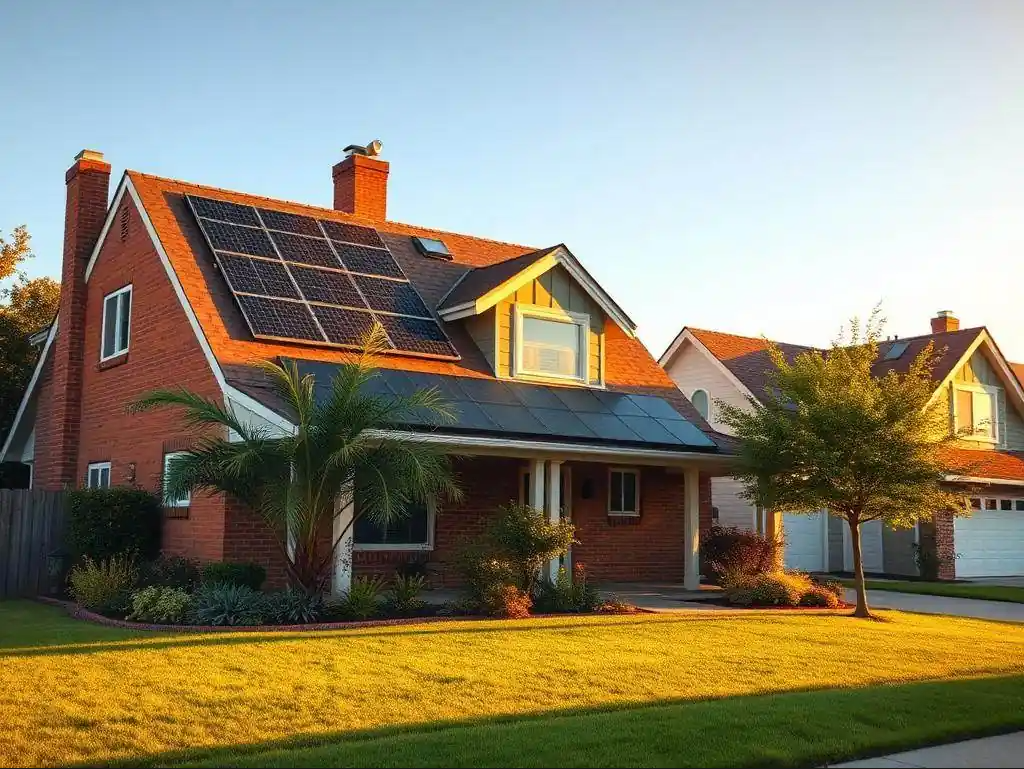
What you get with the right project.
30% federal tax credit
The Residential Clean Energy Credit covers 30% of system cost through 2032.
Eliminate electric bills
Most homes with proper-sized systems eliminate or dramatically reduce electric bills.
Increase home value
Solar homes sell faster and at premium prices in most US markets.
Energy independence
With battery storage, your home keeps power during outages.
25-year warranty
Quality panels are rated for 80%+ output after 25 years; most last 30+ years.
Reduce carbon footprint
A typical home solar system offsets 100,000+ pounds of CO2 over its lifetime.
Why go solar?
-
Lock in 30% federal tax credit through 2032 (phasing down after)
-
Eliminate or dramatically reduce monthly electric bills
-
Increase home value (solar homes sell faster, at premium prices)
-
Energy independence — protection from rate hikes and outages
Your options
Pick the path that fits your project.
-
Rooftop solarStandard rooftop installation. Most homes save $1,500–$2,500 per year on electric bills, with break-even typically in 6-9 years.
-
Solar + batteryAdd a Powerwall-style battery to maintain power during outages and store excess solar energy for nighttime use.
-
Solar financingLoans, leases, and PPAs all available. Most loans qualify for the federal tax credit. Your installer will model your numbers.
Three steps. No phone tag.
Tell your project
Answer a few quick questions about what you need done — about a minute.
We match you with up to 3 local pros
Licensed, ready to take on your project.
Compare quotes — choose what works
Pros reach out to you. No upfront cost, no obligation. Just options.
Solar — your questions, answered
How much does solar actually cost?
Most homeowners pay $18,000–$35,000 for a 7–10 kW system before incentives. The 30% federal tax credit plus state rebates can bring net cost to $12,000–$22,000. Battery storage adds $10,000–$18,000.
How long until it pays off?
Most homeowners break even in 6-9 years and save tens of thousands over a 25-year panel life. Payback depends on your electric rate, sun exposure, and local incentives.
What if my roof needs work first?
Mention your roof condition to your installer — most can advise on whether a roof replacement should happen before solar (typically smart if roof is over 15 years old).
Lease, loan, or buy?
Buying outright (or with a loan) typically yields the highest long-term savings and qualifies for the federal credit. Leases and PPAs offer no-money-down options but lower lifetime savings.
Ready to see what your new bathroom will cost?
Tell us about your project in about two minutes. Free, no obligation.